Most students think fast math means calculating faster.
But when I solve equations quickly, I’m usually not doing more calculations.
I’m reducing them.
The biggest difference is not speed of writing.
It’s how early you recognize the structure of the problem.
Fast students often see the final shape of the equation before they start writing.
That changes everything.
Problem 1

The moment I see this expression, I’m already thinking about the vertex form.
I mentally complete the square:
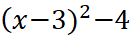
Once I see that structure, the answer becomes immediate:

I’m not expanding or testing values.
I’m recognizing the structure first.
That’s much faster.
Problem 2

A lot of students still expand this equation:

But there’s no reason to.
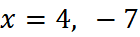
The structure already contains the answer.
If either factor becomes zero, the entire equation becomes zero.
So I immediately see:
Fast algebra is often about recognizing when calculations are unnecessary.
Problem 3
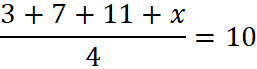
Earlier, I talked about avoiding large numbers.
But that does NOT mean “small numbers are always better.”
What actually matters is total processing cost.
In this problem, multiplying by 4 immediately is efficient because the right side becomes a clean number:

And:
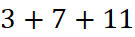
is mentally easy to process.
So the equation becomes:
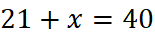
Then:

Fast students are constantly comparing mental workload.
They choose the version that feels lighter overall.
Problem 4

Some students try to expand the equation or use calculus.
But the structure already tells us everything.
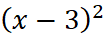
can never become negative.
Its minimum value is:

So the minimum value of is immediately:

This is another example of solving through structure instead of calculation.
Problem 5
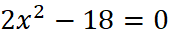
Many students divide everything by 2 first.
That works.
But I sometimes mentally jump directly to:

because I already recognize:
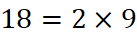
Then the answer becomes:

This is not about skipping logic.
It’s about compressing obvious steps mentally.
Fast students often process multiple small steps at once.
What Fast Students Actually Do
Fast students are usually not solving problems line by line.
They are recognizing structures early and compressing information mentally.
They constantly ask:
- What can I simplify?
- What can I avoid writing?
- Which version creates less mental load?
- What does this equation become eventually?
That’s why their work often looks shorter.
The speed comes from reducing unnecessary processing.
Why This Matters for the SAT
On the SAT, most students already understand basic algebra.
The real challenge is mental efficiency under time pressure.
Students who overload themselves with unnecessary writing or large calculations slow down quickly.
Fast students often succeed because they:
- recognize structure early
- reduce cognitive load
- avoid unnecessary steps
- mentally compress simple operations
In many cases, speed is really about clarity.
Recommended Practice
If you want to improve SAT math speed, don’t only practice difficult problems.
Practice recognizing patterns and structures early.
Try asking yourself:
- Do I really need to expand this?
- Can I simplify first?
- Can I keep the numbers smaller?
- What will this equation eventually become?
The goal is not only getting the correct answer.
The goal is solving with less mental effort.
Train Your Brain, Not Just Your Math
Many students believe SAT math is about memorizing formulas.
But under time pressure, mental efficiency matters just as much.
Fast students constantly reduce cognitive load.
They simplify numbers, compress obvious steps mentally, and avoid unnecessary processing.
If you want to develop this style of thinking, I recommend practicing with resources that focus on:
- mental math
- algebra fluency
- quadratic pattern recognition
- timed SAT exercises
- repeated short drills
Don’t just practice solving problems.
Practice solving them with less mental effort.
That’s where real speed comes from.


コメント