A lot of students think fast math means using tricks on every problem.
But that’s not really how fast problem solvers think.
Sometimes the fastest solution is a smart shortcut.
Other times, the fastest solution is simply solving it normally without overthinking.
That difference matters.
In this article, I’ll show how I decide:
- when to simplify,
- when to predict the answer,
- and when to stop searching for tricks and just solve.
Problem 1
Solve for
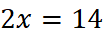
I immediately noticed something:
Both constants are multiples of 7.
That made me expect the final answer might also become a multiple of 7.
So before fully solving it, my brain was already predicting:
That kind of prediction reduces mental load.
Fast math is not only calculation.
It is also anticipation.
Problem 2
Solve for

This one is about structure recognition.
I immediately looked for two numbers that:
- multiply to 20
- add to 9
The answer appears quickly once the structure is recognized.
Instead of calculating heavily, the goal is to identify patterns early.
Problem 3
Solve for x
x/3 + 4 = 10
I subtracted first:
10 − 4 = 6
Then multiplied by 3.
Why?
Because:
6 × 3
is mentally lighter than:
10 × 3 − 4 × 3
This is something many students overlook.
Fast problem solving is often about keeping numbers small and simple for as long as possible.
Problem 4
Find the vertex of the parabola

I rewrote it into vertex form:

So the vertex is:

Again, the important part is not speed alone.
It’s recognizing the structure early enough that the transformation becomes automatic.
Problem 5
Solve for

This problem is interesting.
There are ways to think creatively here.
But honestly?
For a problem this simple, forcing a clever method can actually slow you down.
So I just solved it normally:
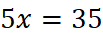

That decision itself is important.
Fast students do not always use advanced tricks.
They choose the method with the lowest mental cost.
Zero-Thinking Math
One thing I focus on is what I call “zero-thinking.”
That does not mean “not thinking.”
It means reducing unnecessary thinking.
Examples:
- predicting the answer shape,
- recognizing structures early,
- avoiding large numbers,
- simplifying before calculating,
- and knowing when NOT to search for shortcuts.
The goal is not to look smart.
The goal is to solve calmly with minimal mental effort.
That is what improves SAT math speed.
Recommended Practice
If you want to build this kind of processing speed, I recommend practicing with books that focus on:
- algebra pattern recognition,
- repeated timed drills,
- and lightweight mental calculation.
The goal is not memorizing tricks.
It is training your brain to process equations efficiently under time pressure.
コメント